
Introduction
Having keenly felt the need for English at Recruit headquarters, I returned to my hometown of Kagawa Prefecture and began looking for a job that involved English.
However, in regional cities at the time, there were hardly any workplaces where English could be used. Still, I thought, "I'm sure I'll learn something if I work for a company with overseas connections," so I decided to work for a manufacturing company listed on the First Section of the Tokyo Stock Exchange and
Developing an "English brain" on the train
It was around this time that I got into the habit of reading on the train to work. I used the " Picture English Book " series,
which explained junior high school level grammar with illustrations, and the teaching materials emphasized "understanding through images" rather than grammar.

 Pochip
Every time I turn a page, a scene pops into my head, and the English words naturally flow to match that image.
Looking back, I think the "sense of English" that I later felt when speaking with foreigners may have been cultivated through this book.
My view of English is simple.
English is something you learn through images.
This is my opinion, which remains unchanged to this day.
Proposals and growth as a public relations professional
The position I found on a job site was in the Public Relations Section of the General Affairs Department. My
main job was updating the pages and blogs that the General Affairs Department was in charge of on our company's website, which is our owned media.
One day, while looking at our company's website, I noticed that the recruitment page was the only page with a design that seemed to have stopped in time.
I asked a senior employee about the current state of the recruitment page, and it seemed that both the public relations and human resources departments felt it was an issue, but due to being busy and understaffed, no one had been able to get to work on it.
So, using my experience in advertising production, I suggested, "Why not revamp your recruitment page?"
The HR department responded with a "We've been waiting for this!" and the project got underway immediately.
Thankfully, even though I was a temporary employee, my boss entrusted me with planning, and I even had the opportunity to travel to Tokyo and Nagoya with my colleagues. Although
it was a short period of time, it was a valuable time that made me realize that "my proposals can make a difference."
Meeting with American employees
There was one full-time employee from the United States in the company. He was in charge of public relations and was responsible for promoting international relations within the company.
At the time, my English ability was at a junior high school level, and I could barely communicate using gestures, but he was very friendly and we often had lively conversations about sumo and American football.
What made an impression on me was that he personally organized an English conversation lunch called
English Lunch I mustered up the courage to participate, but the other employees' English skills were so advanced that I couldn't keep up at all, and I was filled with shame and frustration.
Still, the experience motivated me to "become better at speaking English."
Termination of employment and days of being immersed in English
About a year and two months later, the yen began to appreciate worldwide, and the company, which was an exporting company, began to see its performance affected. In order to prioritize new graduate recruitment, the company decided to gradually terminate the contracts of its temporary employees, and I received notice that my employment would be terminated as well.
Of course it was a shock.
However, the six months during which I was eligible for unemployment benefits became a time when I could focus solely on English
During those six months, my life felt as if I was studying abroad.
I read and listened repeatedly from morning till night, and little by little the rhythm of English seeped into my head. Looking back, those were the times that built the foundation of my "English brain."
Six months of "English study abroad"
After I was told my employment was being terminated, my life changed completely.
I had no money, but I had time. I felt that how I used that time would determine my future.
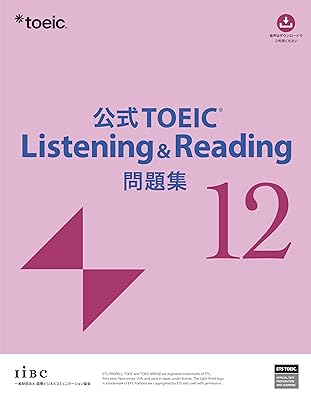
So I bought about 10 volumes of TOEIC Listening & Reading Official Practice Book
I sat at a quiet desk in the library and did nothing but listening and reading every day.
Some days I a portable CD player , and other days I silently solved only
the reading questions It was as if I was studying abroad by myself.
I studied in various libraries and school study rooms across Kagawa Prefecture. Libraries
in Sakaide City and Iiyama Town, a junior college library in Utazu Town, a university library in Zentsuji City, and a study room at a vocational school in Takamatsu City.
I found an empty seat, plugged in my earphones, and immersed myself in a world of English. I was surrounded by high school and university students. There were times when I would go the whole day without speaking to anyone, but strangely, I didn't feel lonely.
I believed that I would turn this time into my future.
 Pochip
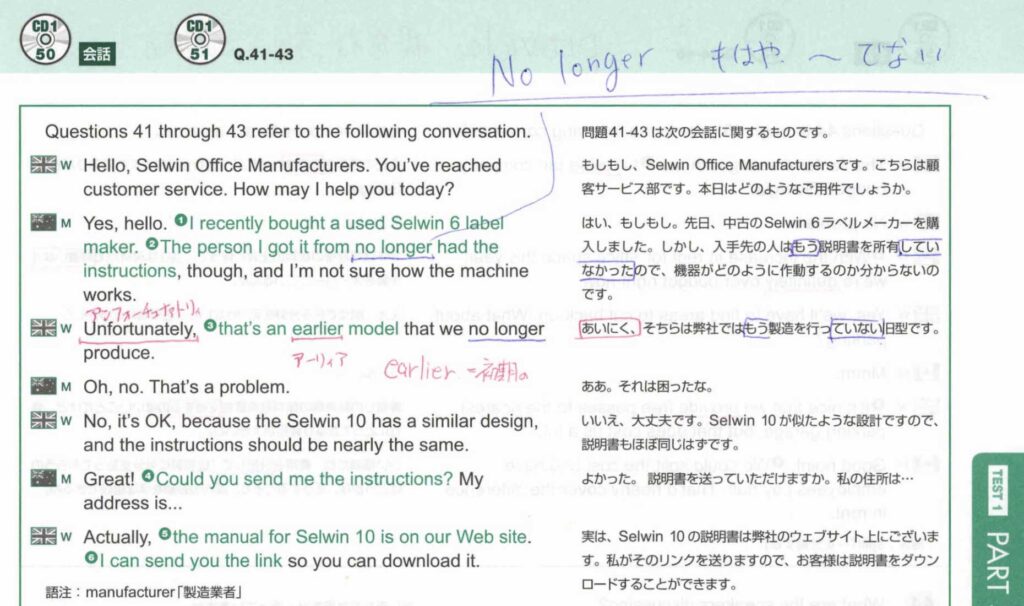
Practical listening practice Part 2
Listening Part 2 was particularly effective .
It consists of a short question and three answers to choose the correct one, and has a rhythm similar to real conversation.
Once you can understand this part, it becomes much easier to respond in everyday conversations.
After six months of self-study, I achieved
645. The fact that I was able to achieve this level through self-study gave me a great deal of confidence.
"If you put in the effort, you'll get results" - this realization later gave me the courage to work with foreign staff at the Naoshima Art Museum.
summary
At that time, I wasn't using English at work.
Still, it was
a time to test my abilities at a large local company and hone my "ability to express myself" through English Then, when my employment was terminated, I finally decided to "seriously learn English."
will talk about my first job using English, working at an art museum in Naoshima



comment